It's been a while -- last summer I took a bit of a break from this blog to use another avenue to write about animal rights issues as an intern for the Center for Ecological Living and Learning (CELL).
Check out my articles on animal captivity written for CELL:
Captivity + ? = Sustainability
What Zoological Facilities Can Make the Grade?
And other articles I authored focused on a sustainability, an enabling concept in animal welfare.
Tuesday, May 17, 2016


Monday, February 17, 2014
SeaWorld: A Killer Show
Written by Grace Brosofsky
When I visited SeaWorld in fourth grade, I quite honestly loved watching the orcas that seemed more akin to cuddly aquatic pandas than any "killers." The whales’ performance projected a sense of splendor, but three years later, another child had a drastically different experience that drew attention to a rarely seen side of SeaWorld’s orca shows. This boy was named Bobby Connell, and he watched as a whale named Tilikum took the life of trainer Dawn Brancheau. Brancheau’s death not only left Bobby and many others with tragic memories but also led to legal battles resulting in the verdict that SeaWorld trainers should not interact with killer whales in the water. SeaWorld appealed this ruling in hopes of resuming its “waterwork” program, raising the question of whether humans are meant to share the water with captive killer whales – a question that we can only reasonably answer with “no."
View my Prezi below for a visual accompaniment for this article
SeaWorld’s orca programs are inherently flawed in several ways, revealing the issues of whales performing with human trainers. Even before Brancheau lost her life, the marine park possessed knowledge of the dangers posed by killer whales, especially Tilikum, a whale involved in a total of three human deaths (Secretary 20). However, SeaWorld continued to breed its deadliest orca (Berg). Because over half of SeaWorld’s orcas descended from a whale described by the park itself as unsuitable for human interaction, hazardous working conditions are inevitable, but the company contradicted its own statement that “animal behavior…cannot always be controlled” when it claimed that it could prevent future tragedy (Berg; Secretary 27-28). SeaWorld’s proposed safety solutions, such as providing trainers with canisters of extra oxygen for emergency situations called “Spare Air,” veil rather than adequately address the key threats faced by employees (“Company”). “Spare Air” is a faulty resolution for many reasons; for example, Brancheau and other attack victims did not even die from a lack of oxygen, and trainers could not feasibly use the equipment during the rapid, abrupt motion involved in a killer whale attack (Berg). In defense of the idea that its programs are acceptable for future use, SeaWorld attempts to allocate the responsibility for both recognizing and avoiding dangers to trainers, which contradicts a safety act stating that the burden of identifying dangerous working conditions lies with the employer, not the employee (Secretary 36). According to former SeaWorld employees, this is only one of the company’s many unacceptable policies (“Blowing the Whistle: Part Two” 20). Orca trainers who had once been passionate about working with captive killer whales found that their experiences at SeaWorld led them to agree upon a stunning conclusion: “There is no legitimate reason to keep these animals in captivity…” (“Blowing the Whistle: Part Two” 20). These trainers remembered following the park’s instructions to tell audiences fabricated information about the well-being of orcas to mask the true nature of killer whale captivity, implementing an unethical SeaWorld policy revealed in an excerpt from a training manual that instructs employees to consciously lie by stating, “If people ask you about a particular animal that you know has passed away, please say ‘I don’t know’” (“Blowing the Whistle: Part One” 19; “Avoid”). SeaWorld’s lack of transparency demonstrates the company’s recognition that if the general public possessed knowledge of the harsh realities of its programs, few would want to see the performances of humans with captive orcas.
Ultimately, the facts point to one conclusion – the
death of Dawn Brancheau cannot be excused as a random accident; it was the
product of the known and unavoidable problems with humans and killer whales
sharing the tank as a stage, providing little justification for SeaWorld’s
appeal to again implement its waterwork program. Making a decision to resume a
show with proven potential to kill trainers would contradict both standards of
safety in the American workplace and the basic standards of reason and morality
that govern our everyday lives. The reason is simple: a good show is not worth
the price of death.
To be continued...
The sad but true story of SeaWorld goes far deeper than the unavoidable hazards of human-whale interaction during performances. Ironically, SeaWorld capitalizes on the love people have for orcas that draws them to watch the animals in awe, but the largely hidden real-life stories of SeaWorld's orcas can only break the hearts of audiences who care about the park's aquatic "performers," just as they broke the hearts of many former trainers. While I would love to think the messages about appreciating killer whales preached through SeaWorld's performances accurately reflected the park's practices, realities such as the forced separation of calves from interconnected orca families and whale deaths and scars related to the trauma of captivity do not fit the mission of caring for the animals. Watch for an article coming up soon on the heartbreaking experiences of whales who spend unnatural lives in cells of water. Also, please visit http://theorcaproject.wordpress.com/ or watch the film Blackfish to get the facts on the inner workings of the captive orca industry - and the inner lives of the orcas, incredibly sentient animals who in many ways lose their lives in the limelight.
Works
Cited
"Avoid Buzzwords.” PBS.org. WGBH Educational Foundation, n.d. Web. 19 Nov. 2012.
Berg, Samantha. “Exclusive Interview #3:
Former SeaWorld Trainer Samantha Berg and the Perils of Orca Captivity (Part
2).” The Orca Project. Orca Project
Corp, 14 Mar. 2011. Web. 19 Nov. 2012.
“Blowing the Whistle: Part One of Two.” Whale and Dolphin (Summer 2012): 18-21.
Print.
“Blowing the Whistle: Part Two of Two.” Whale and Dolphin (Fall 2012): 18-21.
Print.
“Company Story - From an Idea to Saving
Lives.” Spare Air - The Smallest
Redundant SCUBA System Available with Enough Air to Get You to the Surface in
an Out-of-Air Emergency. Submersible Systems, Inc., n.d. Web. 19 Nov. 2012.
Edwards, Laurel. “Tilikum - Killer Whale.” Photograph. Flikr. Yahoo! Inc., 9 Mar. 2008. Web. 25 November 2012.
Michelle. “SeaWorld Orca Section.” Webs, a Vistaprint Company. Freewebs, 16
July. Web. 25 November 2012.
Watching orcas perform at SeaWorld,
Orlando. Personal photograph by author. July 2012.
Secretary of Labor v. SeaWorld of
Florida, LLC. 10-1705. Occupational Safety and Health Review Commission. 2011. U.S. Occupational Safety and Health Review Commission. U.S.
Government Printing Office, Digital Media Service, n.d. Web. 19 Nov. 2012.
Wednesday, June 19, 2013
Another Life Stolen by Poaching
Written by Grace Brosofsky
Poaching steals life away from not only legally protected animals but also humans with the courage to protect the species poachers carelessly destroy. One of these human heroes who recently lost his life due to the crime of poaching was Jairo Mora Sandoval, whose murder on May 31 of this year stood as a saddening example of the brutality that poaching entails. Sandoval worked on Moín Beach to protect the eggs, meat, and shells of critically endangered leatherback sea turtles from poachers focused more on reaping a profit on the black market than allowing a magnificent but dwindling species to survive. These poachers threatened...and still threaten... to prevent the future existence of leatherbacks for the temporary satisfaction of material gain. Worse, as Sandoval tried to teach the public, poachers do not simply kill for money; they also kill for drugs, and drug runners added an extra element of danger to the beach at which Sandoval toiled. Valuable life is destructed so that poachers and those working with them can attain something destructive to life. As the largest of all sea turtles, leatherbacks are both a natural resource in Costa Rica drawing awed tourists to Caribbean beaches and living creatures who do not deserve to have no chance to begin their lives because of the selfish acts of humans enveloped in a world of crime.

While the details are fuzzy, what we do know is this: Sandoval and other conservationists saw enough value in the preservation of the sea turtles to dedicate hours upon hours to laboring for the animals' benefit for little pay, but the Costa Rican government has been willing to act as if almost blind to the blatantly illegal actions of poachers despite its focus on promoting an image of the country as a paradise for ecotourism. During his life, Sandoval pleaded for greater protection and government support in the national Costa Rican newspaper La Nación and took the La Nación team on a tour of the beach, where they witnessed the stronger presence of poachers than authorities. Conservationists should not have to risk their lives to do what is right while poachers continue to do what is wrong unstopped by weakly enforced laws. There is no ethical option but to honor the life and death of the murdered man by supporting his work instead of indirectly supporting the "work" of poachers through apathy. Inaction sends poachers the message that killing and drug dealing are acceptable. Poachers have been implementing their own brute "government" over Moín Beach, rendering environmentalists powerless a year before Sandoval's death when they approached a guarded sea turtle hatchery carrying AK-47 rifles (powerful weapons not even carried by the police), taking the communication devices of the volunteers along with 1,520 leatherback eggs. Mora's murder was another expression of the confidence of poachers that their lawless actions give them power - a confidence that the government must break.
We can neither ignore or forget the tainted focus of poaching, a trade which values money and even drugs over animal - and human - life. Challenge poaching and help change Sandoval's death from a victory of poachers casting fear over conservationists to an impetus for progress in allowing life, not death, to have victory on Costa Rica's beaches by signing this petition:
http://action.seaturtles.org/p/dia/action3/common/public/?action_KEY=13612
For more of the sadly true story of Jairo Mora Sandoval's death, please visit:
Washington Post on Sandoval
ABC News on Sandoval
National Geographic on Sandoval
Costa Rican Times on Sandoval
Sandoval in La Nacion
Poaching steals life away from not only legally protected animals but also humans with the courage to protect the species poachers carelessly destroy. One of these human heroes who recently lost his life due to the crime of poaching was Jairo Mora Sandoval, whose murder on May 31 of this year stood as a saddening example of the brutality that poaching entails. Sandoval worked on Moín Beach to protect the eggs, meat, and shells of critically endangered leatherback sea turtles from poachers focused more on reaping a profit on the black market than allowing a magnificent but dwindling species to survive. These poachers threatened...and still threaten... to prevent the future existence of leatherbacks for the temporary satisfaction of material gain. Worse, as Sandoval tried to teach the public, poachers do not simply kill for money; they also kill for drugs, and drug runners added an extra element of danger to the beach at which Sandoval toiled. Valuable life is destructed so that poachers and those working with them can attain something destructive to life. As the largest of all sea turtles, leatherbacks are both a natural resource in Costa Rica drawing awed tourists to Caribbean beaches and living creatures who do not deserve to have no chance to begin their lives because of the selfish acts of humans enveloped in a world of crime.

While the details are fuzzy, what we do know is this: Sandoval and other conservationists saw enough value in the preservation of the sea turtles to dedicate hours upon hours to laboring for the animals' benefit for little pay, but the Costa Rican government has been willing to act as if almost blind to the blatantly illegal actions of poachers despite its focus on promoting an image of the country as a paradise for ecotourism. During his life, Sandoval pleaded for greater protection and government support in the national Costa Rican newspaper La Nación and took the La Nación team on a tour of the beach, where they witnessed the stronger presence of poachers than authorities. Conservationists should not have to risk their lives to do what is right while poachers continue to do what is wrong unstopped by weakly enforced laws. There is no ethical option but to honor the life and death of the murdered man by supporting his work instead of indirectly supporting the "work" of poachers through apathy. Inaction sends poachers the message that killing and drug dealing are acceptable. Poachers have been implementing their own brute "government" over Moín Beach, rendering environmentalists powerless a year before Sandoval's death when they approached a guarded sea turtle hatchery carrying AK-47 rifles (powerful weapons not even carried by the police), taking the communication devices of the volunteers along with 1,520 leatherback eggs. Mora's murder was another expression of the confidence of poachers that their lawless actions give them power - a confidence that the government must break.
We can neither ignore or forget the tainted focus of poaching, a trade which values money and even drugs over animal - and human - life. Challenge poaching and help change Sandoval's death from a victory of poachers casting fear over conservationists to an impetus for progress in allowing life, not death, to have victory on Costa Rica's beaches by signing this petition:
http://action.seaturtles.org/p/dia/action3/common/public/?action_KEY=13612
For more of the sadly true story of Jairo Mora Sandoval's death, please visit:
Washington Post on Sandoval
ABC News on Sandoval
National Geographic on Sandoval
Costa Rican Times on Sandoval
Sandoval in La Nacion
Tuesday, February 19, 2013
Horse Meat in "100% Beef Burgers": Just One Piece of an Unappetizing Story
Written by Grace Brosofsky
Horse meat in a "100% beef burger"? It sounds absurd, but DNA tests have sounded yet another alarm that the meat industry hides difficult truths in its shadows. What should be an atrocious abnormality has become a sickening commonality in recent news. Horse has been discovered not in just one dish prepared by an obsolete chef but in beefburgers sold by a number of big brands in the United Kingdom such as Tesco, Findus, Aldi, and Burger King...and these companies can no longer deny it. While Burger King initially attempted to cling to its claim that its burgers contained beef and nothing but beef, even the fast food giant itself admitted to the public that customers could very well bite into the equines they might prefer to mount than eat, and the story doesn't end there. The unnerving confessions of the four UK companies aforementioned are only a small sliver of a story I still find almost indigestible.
It all began behind the scenes last November when, for the first time, the Food Safety Authority of Ireland (FSAI) conducted tests for the presence of the DNA of different species (including horse) on a varied selection of beefburgers. These tests were certainly abnormal, but they were far from pointless as proven when the results came back, revealing that more than one-third of the products tested contained horse DNA. After arriving at such alarming results, the FSAI repeated the testing procedure to verify that the truth was as bad as it seemed... and found that it was. The release of the FSAI's findings on January 15 launched a chain of accusations and denials as meat companies in the United Kingdom attempted to evade responsibility for feeding horse to unwary consumers. In the cloud of chaotic investigations and disputed leads, one thing became more and more certain: the horse meat scandal involved much more than just one company or even one nation.
And as each day unfolds, the scandal explodes into even larger proportions. As UK companies began to recall beefburgers, other countries such as Sweden, Switzerland, the Netherlands, Belgium, and Germany quickly fell into the horse meat scandal. Back in Britain, horse meat turned up even outside supermarkets and fast food restaurants; meals served to children at schools and the sick at hospitals tested positive for horse. The story has yet to end, and new, ever-sickening developments continue to emerge at an overwhelming pace. Just yesterday, Nestlé discovered levels of horse DNA in its own dishes, and the well-known company's Beef Tortellini and Buitoni Beef Ravioli sold in Spain and Italy joined the expanding list of recalled foods.

Horse meat in a "100% beef burger"? It sounds absurd, but DNA tests have sounded yet another alarm that the meat industry hides difficult truths in its shadows. What should be an atrocious abnormality has become a sickening commonality in recent news. Horse has been discovered not in just one dish prepared by an obsolete chef but in beefburgers sold by a number of big brands in the United Kingdom such as Tesco, Findus, Aldi, and Burger King...and these companies can no longer deny it. While Burger King initially attempted to cling to its claim that its burgers contained beef and nothing but beef, even the fast food giant itself admitted to the public that customers could very well bite into the equines they might prefer to mount than eat, and the story doesn't end there. The unnerving confessions of the four UK companies aforementioned are only a small sliver of a story I still find almost indigestible.
It all began behind the scenes last November when, for the first time, the Food Safety Authority of Ireland (FSAI) conducted tests for the presence of the DNA of different species (including horse) on a varied selection of beefburgers. These tests were certainly abnormal, but they were far from pointless as proven when the results came back, revealing that more than one-third of the products tested contained horse DNA. After arriving at such alarming results, the FSAI repeated the testing procedure to verify that the truth was as bad as it seemed... and found that it was. The release of the FSAI's findings on January 15 launched a chain of accusations and denials as meat companies in the United Kingdom attempted to evade responsibility for feeding horse to unwary consumers. In the cloud of chaotic investigations and disputed leads, one thing became more and more certain: the horse meat scandal involved much more than just one company or even one nation.
And as each day unfolds, the scandal explodes into even larger proportions. As UK companies began to recall beefburgers, other countries such as Sweden, Switzerland, the Netherlands, Belgium, and Germany quickly fell into the horse meat scandal. Back in Britain, horse meat turned up even outside supermarkets and fast food restaurants; meals served to children at schools and the sick at hospitals tested positive for horse. The story has yet to end, and new, ever-sickening developments continue to emerge at an overwhelming pace. Just yesterday, Nestlé discovered levels of horse DNA in its own dishes, and the well-known company's Beef Tortellini and Buitoni Beef Ravioli sold in Spain and Italy joined the expanding list of recalled foods.

Why does the scandal seem to have no bounds? The simplest answer is this - it is the result of an industry that is itself unbounded by humane standards and in many areas untouched by basic ethics. The meat industry asserts that it has complete record of its supply chains, but the large-scale fraud consuming the industry prevents that assertion from being even close to true. Horse meat ends up in beefburgers because a fraudulent trade of horses for slaughter is sadly interwoven into the meat market, and the FSAI's reports have opened a door to a disturbing world beneath the public eye. Records suggest that thousands of horses destined for slaughter illegally move between at least thirteen nations, and criminal organizations have used the horse trade as a cover for the transport of cannabis. In an industry that operates outside the limits of law, no standards can prevent the worst from happening, adding an additional element of danger to the troubling presence of horse in so-called beef products. While slaughtering horses given the painkiller "bute" for human consumption explicitly violates the law because of the potentially deadly effects of the drug, officials know of at least six horses sent from Britain to France for use in human meals despite testing positive for bute. In the shadowy world of the underground horse trade, bute could have slipped into meat many other times unknown to authorities, and if horse meat contaminated with bute can adulterate beef products, what else goes on unstopped by regulations before meat reach our plates?
The answer is harsh but unavoidable. The meat industry is full of truths akin to horror stories. The horse meat scandal sends some grave reminders about the facts of an industry marked with suffering: the "guarantees" of the meat vendors melt in the face of truth, and behind the cheerful facades constructed by companies such as Burger King and Nestlé, meat is the product of realities that fail our every expectation.
For more facts on the unthinkable events of the horse meat scandal please visit:
New York Times - Nestlé
Guardian - The Essential Guide to the Scandal
Guardian - Timeline of the Scandal
Guardian - Horse Meat Schools and Hospitals
Guardian - No more excuses. The only defensible option is to go vegetarian
The answer is harsh but unavoidable. The meat industry is full of truths akin to horror stories. The horse meat scandal sends some grave reminders about the facts of an industry marked with suffering: the "guarantees" of the meat vendors melt in the face of truth, and behind the cheerful facades constructed by companies such as Burger King and Nestlé, meat is the product of realities that fail our every expectation.
For more facts on the unthinkable events of the horse meat scandal please visit:
New York Times - Nestlé
Guardian - The Essential Guide to the Scandal
Guardian - Timeline of the Scandal
Guardian - Horse Meat Schools and Hospitals
Guardian - No more excuses. The only defensible option is to go vegetarian
Friday, June 29, 2012
Daniel: The Beagle who Survived the Gas Chamber
Written by Grace Brosofsky
Gas chambers are often associated with the terrors of war, but few realize that they are also used in shelters across America to kill animals who simply have no home. Daniel, a beagle in an Alabama shelter, would have been one of the millions to die by gassing, but unlike the other eighteen dogs in his gas chamber, he somehow came out alive. Unable to make the beagle undergo gassing again after his miraculous survival, the animal control officer in charge gave Daniel a chance at adoption, and the survivor found a loving home in New Jersey. Daniel's survival not only offered him a new beginning but also sparked change, raising awareness of the fate his companions suffered. Although some state laws have been passed against gassing such as "Daniel's Law" in Pennsylvania, gas chambers continue to be used in many other states despite being condemned by the American Humane Association for causing animals to suffer a long, stressful death. Help further "The Miracle Beagle"'s legacy and spread his story of hope by casting a vote for him for the Hero Dog Awards at http://www.herodogawards.org/vote/?nominee=29998526#, and, please, if you or someone you know is considering buying a new pet, help give a dog or cat at a local shelter a happy ending like Daniel's. You can make a difference.

For more information on gassing in animal shelters:
http://www.americanhumane.org/animals/stop-animal-abuse/advocacy/campaigns/stop-gassing-campaign.html
Gas chambers are often associated with the terrors of war, but few realize that they are also used in shelters across America to kill animals who simply have no home. Daniel, a beagle in an Alabama shelter, would have been one of the millions to die by gassing, but unlike the other eighteen dogs in his gas chamber, he somehow came out alive. Unable to make the beagle undergo gassing again after his miraculous survival, the animal control officer in charge gave Daniel a chance at adoption, and the survivor found a loving home in New Jersey. Daniel's survival not only offered him a new beginning but also sparked change, raising awareness of the fate his companions suffered. Although some state laws have been passed against gassing such as "Daniel's Law" in Pennsylvania, gas chambers continue to be used in many other states despite being condemned by the American Humane Association for causing animals to suffer a long, stressful death. Help further "The Miracle Beagle"'s legacy and spread his story of hope by casting a vote for him for the Hero Dog Awards at http://www.herodogawards.org/vote/?nominee=29998526#, and, please, if you or someone you know is considering buying a new pet, help give a dog or cat at a local shelter a happy ending like Daniel's. You can make a difference.
For more information on gassing in animal shelters:
http://www.americanhumane.org/animals/stop-animal-abuse/advocacy/campaigns/stop-gassing-campaign.html
Tuesday, June 26, 2012
The Inside Story on Ringling Bros.- Torture or Entertainment?
Written by Grace Brosofsky for the sake of animals
 Most people likely recall a visit to the circus as a fun childhood experience filled with memorable sights and spectacular performances, but I have discovered that lighthearted circus shows often have a much darker side marked by animal cruelty. After years of working behind-the-scenes at Ringling Bros., elephant trainer Sam Haddock became ashamed of the torture he helped inflict upon animals at Ringling's "Center for Elephant Conservation" and decided to do the right thing and reveal the disturbing truths of his career. The trainer gave a firsthand account of what he witnessed and partook in on a day-to-day basis, revealing that the methods Ringling uses to train elephants are not based on rewards and motivation but on pain and punishment. According to Haddock, "...violent training methods are the only way an elephant can be trained to perform certain tricks required for a circus act. It's bunk when the circus says that it's showcasing an elephant's natural behavior." While it may seem ideal to believe circus elephants are enjoying the performance as much as the audience, the cold truth is that the "fun" stunts are not possible without the animals experiencing harsh treatment, and the tricks that seem delightful are an expression of misery, not pleasure.
 Here are the facts.
After being roughly dragged away from their mothers at only 18-24 months of age, baby elephants at Ringling Bros. are constrained by all four legs and often become afflicted with lesions through their struggles to gain free movement. Even during walks, the animals' freedom is severely limited. The babies are tied to anchor elephants and restrained by ropes around their legs and bullhooks on their trunks- hooks resembling fireplace pokers that Haddock, as a former bullhook-maker, admitted have the sole purpose of hurting the elephant.

Bullhooks are not the only painful aspect of Ringling's method. Preparing a baby elephant for its destiny in the circus is characterized by "a lot of manpower, brute force, electricity, and a savage disposition...like raising a kid in jail." Photographs reveal the degree of cruelty that characterizes Ringling's attempts to mold elephants into circus performers during training sessions.

Trainers use ropes to force the elephant pictured above into positions it will need to learn for its circus career, paying little mind to its screaming- a very commonplace noise in the training center according to Haddock.

In this image, bullhooks are used so that elephants can be forced into learning tricks out of fear.
These hard facts and shocking images are only the beginning of the world Ringling's elephants must live in outside of the crowd's eye. When animals suffering a life of hardship is an integral part of Ringling Bros. and Barnum and Bailey Circus, can big-top performances really be called entertainment? Or is Ringling's "Greatest Show on Earth" really the "Saddest Show on Earth"? Next time the circus comes to town, remember the story behind the show, and before buying tickets take a moment to consider whether Ringling Bros. is torture or entertainment.
For more information and ways you can make a statement against circus cruelty, visit http://www.ringlingbeatsanimals.com.
Saturday, March 24, 2012
Australian Live Exports: Terror Beyond Belief
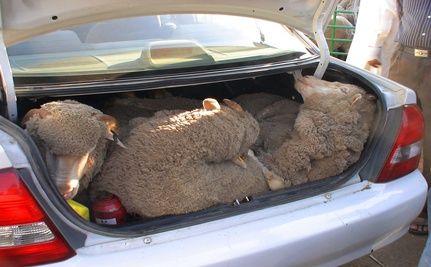 I was horrified to discover the appalling facts of the Australian live export industry- an industry that not only takes the lives of millions of animals but uses extreme cruelty to do so. Every step of the journey the exported animals make to their death is a step of terror. They are roughly handled, whipped, tied, dragged, and even forced into car trunks without any consideration of their pain. Much of their long journey takes place in crammed ships where many die from starvation and disease. The plight of the sheep and cows victim to live export only worsens when the animals reach their final destination. They are killed- murdered- in ways even slaughter experts view as terrible, ways that defy international legislation. Their eyes are gouged out, their throats are sliced again and again, and in short they consciously undergo extensive torture until death. In Indonesia, the final destination of many Australian live exports where world standards of humane slaughter are ignored, throat-slicing occurs an average of eleven times, and animals are sometimes subjected to rites of torture each night prior to their death.
These millions of animals are not just statistics, they are individual sheep and cattle whose suffering is real as incomprehensible as it seems. They struggle to escape their barbaric punishment but are given no relief and have no hope unless we voice their agony. Please join me in making the voices of live export animals heard by simply signing a letter at http://www.banliveexport.com/1/#takeAction. In the words of slaughter expert Professor Temple Grandin, the Australian live export industry "[breaches] every humane standard all around the world" and is "atrocious and unacceptable". It is an industry that we must take a stand against to preserve the basic principles of humanity.
You be the final judge- can the reality shown in this video be allowed to continue? Can it be called anything but cruelty and inhumanity?
You be the final judge- can the reality shown in this video be allowed to continue? Can it be called anything but cruelty and inhumanity?
Mark 1 restraint box - you be the judge from Animals Australia on Vimeo.
Information Sources: http://lcanimal.org/
http://www.banliveexport.com/
Monday, February 13, 2012
Chipotle Exposes the Cruelty of Factory Farming
In a new commercial, Chipotle uses cute animation to reveal the dark, much hidden truth behind the American meat industry- the animals on our dinner plates are often subject to terrible cruelty in factory farms. The commercial not only advertises the company's natural food but also serves as a reminder to consider the torture animals have to undergo before eating them.
Sunday, January 22, 2012
Horses Don't Deserve Slaughter: Stop an American Tragedy
Written by Grace Brosofsky for the sake of animals


http://secratariat.webs.com/factsofhorseslaughter.htm
http://stophorseslaughter.com/blog/
You can also sign this petition at http://signon.org/sign/ban-horse-slaughter-now.
No one can dispute that horses have served as beloved companions to Americans for years. They have performed farm labor, been ridden to victory in races, and even saved human lives. Many people have found emotional connections with horses, animals that have proven to be sentient, intelligent, and loving. Do these animals deserve to die?
When horses have indisputably provided so much for humans, it is impossible to say that disposing of these animals through slaughter is in any way fair or humane. However, horse slaughter is becoming a reality on the home front- in America, a country the horse helped to build. As absurd as this idea seems, Congress has lifted the ban on horse slaughter, a legislative move that can be described as nothing but backwards progress.
When horses have indisputably provided so much for humans, it is impossible to say that disposing of these animals through slaughter is in any way fair or humane. However, horse slaughter is becoming a reality on the home front- in America, a country the horse helped to build. As absurd as this idea seems, Congress has lifted the ban on horse slaughter, a legislative move that can be described as nothing but backwards progress.
Proponents of horse slaughter have made up many excuses for this absurdity, saying that the prevention of horse agriculture destroyed "an entire sector of animal agriculture for purely sentimental and romantic notions," but is life merely a sentimental or romantic notion? In my opinion, life cannot be said to be less valuable than money, but even from a purely economic standpoint, horse slaughter has many drawbacks. According to the USDA, if horse slaughterhouses open in the United States, Congress will have to allocate money for inspections, and taxpayers' dollars will be wasted on an industry most taxpayers don't support. In addition, horse slaughter will damage rather than aid the horse industry. Horse breeders have been breeding fewer horses due to the economic recession, helping to balance supply and demand, but if slaughterhouses are instituted in America, inhumane breeders will be more likely to breed excess foals with the intention of selling "bad" horses to slaughterhouses.

In addition, horse meat of "unwanted" horses cannot even be said to be fit for human consumption. Proponents of horse slaughter such as Sue Wallis have unwittingly admitted that unsafe drugs are given to horses that could contaminate our food supply. In truth, horses are not meant to be killed, so they are raised without consideration to FDA regulations, making the industry one that is mutually harmful to humans and to horses.
Furthermore, while horse consumption advocates try to understate the cruelty of the slaughter process by terming it "euthanasia", horses being slaughtered experience everything but a painless death. Reports of U. S. slaughterhouses expose horses being bound by their back legs and undergoing throat-slicing- an end to life that no sentient being should have to experience. In addition, according to the USDA, 92 percent of horses sent to the slaughterhouse are not in a condition where they need to be killed; they would have a good quality life if not slaughtered, further proving that horse slaughter is in no way “beneficial” to the horse. The slaughter of horses damages the environment, and U. S. slaughterhouses have been revealed to disobey environmental regulations. If these animals were allowed to die a natural death, this environmental harm would not be caused.
Lastly, take a moment to consider this issue through the eyes of a horse. Imagine that you have never done anything wrong, and suddenly the people you have served take you to your death, a death that is slow, painful, and gruesome. Although lawmakers have sadly voted to allow this to be the reality for many horses, you can take a stand to stop the cruelty by joining me in signing this petition: http://www.change.org/petitions/stop-usa-horse-slaughter.
http://secratariat.webs.com/factsofhorseslaughter.htm
http://stophorseslaughter.com/blog/
You can also sign this petition at http://signon.org/sign/ban-horse-slaughter-now.
Sunday, September 11, 2011
Dissection Hurts: How "Education" is Harming Students, Animals, and the Environment
Written by Grace Brosofsky for the sake of animals
For most people, dissection is accepted as part of a good, hands-on education. However, the much-hidden truth about dissection makes it clear that it should be no part of ethical schooling. This truth is that dissection hurts everyone- animals, the environment, and even the students whom it is supposed to help educate- making it hard to understand why it is considered anything close to "education".

First and foremost, dissection unnecessarily takes the lives of millions of innocent animals every year. The animals sold by science supply companies are not simply gathered after their natural deaths as many students believe. Instead they are bred to be brutally killed, bought from other inhumane industries such as factory and fur farming, or taken by "bunchers" who seize strays, animals being given free-of-cost to people offering a "good home", and sometimes even pets that are taken illegally without payment. Supply companies have been revealed to treat animals with revolting cruelty under the cover of their claims to "enrich the educational experience" with their products. One large American supply seller was shown to have forced formaldehyde into living cats- the same animals that serve as beloved and often pampered companions to many American families. In Mexico, homeless children were paid one dollar for every cat they collected, and the gathered animals were then crammed together into a sack and drowned to be purchased by American businesses such as Southwestern Scientific. These are only a few of the numerous cases of cruelty that show the truth behind cutting for education. It is clear that the lives of innocent animals of many kinds being destroyed should be no part of humane education.
Furthermore, dissection has been shown to negatively affect the very people who are supposed to benefit from it- students. The formaldehyde and formaldehyde-based substances used to preserve dead animals being dissected can cause numerous health problems. Included among these are lung, throat, and nasal cancer, all which most strive to avoid. Undoubtedly, students should not be made to participate in an activity that could potentially make them at a greater risk for diseases that could take their lives. People have also had mental illnesses and violence partially induced by dissecting. When students are taught to cut dead animals into pieces, they are subtly taught to think of life as less and less valuable and become cold to what they are doing. For example, Jeffrey Dahmer, an infamous murderer, admitted that academic dissection was what prompted him to be attracted to killing and mutilation. Few can argue that education should not involve making students more inclined to murder.

Lastly, schools today try to teach environmental consciousness but at the same time are harming our planet through dissection. The killing of the most-often dissected animals- frogs- causes the ecosystem to become off-balanced, and insects grow to be a significant issue. When insects increase in number because of the decrease of frogs, insect-carried diseases become more prominent, food supplies become damaged, and more toxic insecticides are used. Furthermore, the discarding of toxin-covered dead animals can also inflict environmental problems. The toxic chemicals released can kill wild animals and make our land, water, and food all more polluted. Why dissect when doing so hurts everyone? The answer is that there is no reason for dissection, especially when there are effective and cost-efficient alternatives such as computer-simulated dissections and life-like models. The truth is clear- we need to stop making an activity that so greatly harms animals, students, and the environment "education". Make a difference and take a stand against this inhumane practice by signing this petition at http://www.ipetitions.com/petition/stopdissection/.
Information Source: http://www.peta2.com/COLLEGE/c-lowdown.asp.
Wednesday, August 31, 2011
Horse-Drawn Carriage Rides: Less Beautiful Than They Seem
Written by Grace Brosofsky
Rides in horse-drawn carriages seem like a beautiful, memorable, and sentimental way to tour cities such as New York, but in truth, they are all but beautiful in the light of what the horses who pull them undergo. First and foremost, horse-drawn carriages can cause accidents fatal for both horses and humans to occur. When pulling carriages through streets full of honking traffic, horses can be easily spooked by the chaos and noise surrounding them. According to PETA, "A simple car backfire or a honking horn can cause a horse to panic and run around uncontrollably, endangering the horse, the carriage occupants, and car drivers." It is hard to understand why the lives of humans and animals would be endangered for the romance of a carriage ride.
 Not only are the horses put at risk on the streets, they are often treated with very poor standards outside of the unavoidable dangers of their "jobs". There are few regulations put into place to protect the rights of these animals. In describing the plight of carriage horses, actress Lea Michele said, "Imagine for a moment that you're forced to do hard physical labor all day, seven days a week- whether it's sweltering hot or freezing cold outside. At the end of the day, instead of relaxing on [an] easy chair or sleeping in a comfortable bed, you are locked in a tiny closet all night long." Sadly, this is the life of the horses forced to pull carriages. They are made to labor extensive hours through extreme weather conditions, only to come home to far from spacious, dilapidated, multi-level "stables" that they have to trudge up narrow ramps to enter. The horses suffer from many health problems, often having lung illnesses and becoming lame from walking on streets made for cars, not animals. After all their toil, they are often sold to slaughterhouses instead of being allowed to live the remainder of their lives comfortably. The average life expectancy for horses given the job of pulling carriages in New York City is sadly low- less than four years, in comparison to a police horse's working life of fourteen years.
 In the words of Debbie Leahy, the director of PETA, "There's nothing 'romantic' about animal abuse, injury, and death. How many more horses will be mangled and how many more drivers will land in hospital beds before New York City bans these devices?" The truth is that horses deserve to be grazing in pastures, not dragging carriages through busy city streets. You can make a difference by signing a petition to stop this seemingly romantic, but truthfully inhumane practice at http://www.change.org/petitions/ban-horse-drawn-carriages-in-new-york-city-new-bill-needs-support.
Links to Information Sources:
http://thestir.cafemom.com/entertainment/114617/glee_star_lea_michele_horsedrawn
http://www.usuallyvegan.com/tag/horse-drawn-carriage-rides-cruel/
http://www.banhdc.org/
Rides in horse-drawn carriages seem like a beautiful, memorable, and sentimental way to tour cities such as New York, but in truth, they are all but beautiful in the light of what the horses who pull them undergo. First and foremost, horse-drawn carriages can cause accidents fatal for both horses and humans to occur. When pulling carriages through streets full of honking traffic, horses can be easily spooked by the chaos and noise surrounding them. According to PETA, "A simple car backfire or a honking horn can cause a horse to panic and run around uncontrollably, endangering the horse, the carriage occupants, and car drivers." It is hard to understand why the lives of humans and animals would be endangered for the romance of a carriage ride.


Links to Information Sources:
http://thestir.cafemom.com/entertainment/114617/glee_star_lea_michele_horsedrawn
http://www.usuallyvegan.com/tag/horse-drawn-carriage-rides-cruel/
http://www.banhdc.org/
Monday, August 8, 2011
Save a Life


Tuesday, August 2, 2011
The Cosmetic Crisis: The Sad Facts on Animal Testing
When using make-up or household goods such as furniture polish, it is easy not to think that these products are doing any harm. However, I have learned that each year millions of animals suffer and often die in cosmetic testing, the inhumane testing of these consumer products. Essentially unknown to most shoppers, animals as loved as dogs, guinea pigs, and rabbits who did nothing to make themselves deserving of punishment are tortured and jeopardized. The conclusions to the tests do not even help human health, making the conduction of animal testing difficult to justify.
 There are multiple different types of these tests, and none can be described as anything but irrationally cruel. In some tests, albino rabbits are confined to stocks that do not allow any movement and let only their heads stick out. Their eyes are forced open with painful clasps so that a substance can be dripped in. The adverse effects of the product being tested are recorded at set amounts of time. This can go on for up to eighteen long and gruesome days, while the rabbits endure such symptoms as blood loss, inflammation of the irises and eyelids, ulcers, large-scale depreciation, and even permanent vision loss. Not only must the rabbits experiences these painful symptoms, they also often die by breaking their necks in attempt of freedom from the tight hold of the stocks.
The acute toxicity (lethal dose or poisoning) test is another, possibly even crueler, type of cosmetic testing. An animal victim to this form of testing is given a substance through its mouth or eyes, punctures cut in its throat, or tubes inserted into its stomach. It can also receive the product being tested through a gas mask or shot into its blood vessels or beneath its skin. Animals receive more and more of the product until a certain quantity of them, which can range from 50 to 100 percent, sadly dies. Before dying, they experience such symptoms as blood loss through the mouth, nose, and eyes, difficulty breathing, seizures, atypical body stance, emancipation, rashes, constipation, and diarrhea.
Animal testing can be accredited with purposely killing large masses of animals and harming many more, but it cannot even be said to produce solid results judged as scientifically accurate. Many companies use animal testing simply because by performing it they can sell products that are not truly safe due to the tests' inaccuracy. They often try to argue that they must use animals in cosmetic testing, but over 500 companies have shown that other accurate testing methods can be used, such as technological simulations, tissue and cell cultures, and tests on corneas from eye banks. The Food and Drug Administration and the Consumer Product Safety Commission do not require animal testing, so there is no reason for it to be performed. Take a stand against this inhumane process that tortures millions by buying cruelty-free products.
Information Source: http://www.mercyforanimals.org/cosmetic_testing.asp
There are multiple different types of these tests, and none can be described as anything but irrationally cruel. In some tests, albino rabbits are confined to stocks that do not allow any movement and let only their heads stick out. Their eyes are forced open with painful clasps so that a substance can be dripped in. The adverse effects of the product being tested are recorded at set amounts of time. This can go on for up to eighteen long and gruesome days, while the rabbits endure such symptoms as blood loss, inflammation of the irises and eyelids, ulcers, large-scale depreciation, and even permanent vision loss. Not only must the rabbits experiences these painful symptoms, they also often die by breaking their necks in attempt of freedom from the tight hold of the stocks.The acute toxicity (lethal dose or poisoning) test is another, possibly even crueler, type of cosmetic testing. An animal victim to this form of testing is given a substance through its mouth or eyes, punctures cut in its throat, or tubes inserted into its stomach. It can also receive the product being tested through a gas mask or shot into its blood vessels or beneath its skin. Animals receive more and more of the product until a certain quantity of them, which can range from 50 to 100 percent, sadly dies. Before dying, they experience such symptoms as blood loss through the mouth, nose, and eyes, difficulty breathing, seizures, atypical body stance, emancipation, rashes, constipation, and diarrhea.
Animal testing can be accredited with purposely killing large masses of animals and harming many more, but it cannot even be said to produce solid results judged as scientifically accurate. Many companies use animal testing simply because by performing it they can sell products that are not truly safe due to the tests' inaccuracy. They often try to argue that they must use animals in cosmetic testing, but over 500 companies have shown that other accurate testing methods can be used, such as technological simulations, tissue and cell cultures, and tests on corneas from eye banks. The Food and Drug Administration and the Consumer Product Safety Commission do not require animal testing, so there is no reason for it to be performed. Take a stand against this inhumane process that tortures millions by buying cruelty-free products.
Information Source: http://www.mercyforanimals.org/cosmetic_testing.asp
Monday, August 1, 2011
Introduction
Hi, my name is Grace Brosofsky, and I have an enormous love for animals. I am writing this blog to bring awareness to the cruel misfortunes of animals about issues such as animal testing, slaughtering, and homelessness. Animals need a voice, and I am hoping to help be their voice by presenting not just an opinion, but factual information about their sadly true situations. By doing this, I hope that I am able to help animals have the better life that they deserve.

Subscribe to:
Posts (Atom)